7 Signs That a Chihuahua Is Nervous to the Point of Aggression
Recognizing when a chihuahua is nervous enough to become aggressive is one of the most important skills a chihuahua owner can develop. I learned this the hard way when my chihuahua Ziggy, who I had always described as a little cranky, snapped at a child who reached for him at a park. In that moment I realized that what I had been dismissing as crankiness was actually deep seated anxiety that had been building for months, and Ziggy had been telling me about it the entire time through signals I had not been paying attention to.
Chihuahuas who bite or show aggression are almost never doing it because they are mean. They are doing it because they are scared, and fear based aggression is the most common type of aggression in the breed. Understanding the signs that come before a bite gives you the opportunity to intervene, remove your dog from the situation, and address the underlying anxiety that is driving the behavior.
1. Excessive Trembling in Non-Cold Situations
Chihuahuas are famous for shaking, and it can be hard to tell the difference between a chihuahua who is cold, excited, or terrified. The key is context. If your chihuahua is trembling in a warm environment during a social situation, around new people, in a new place, or when confronted with something unfamiliar, that trembling is almost certainly anxiety. Ziggy would shake uncontrollably at the vet’s office, which I initially attributed to the cold table, but it happened in the waiting room too, and in the parking lot, and basically from the moment we pulled into the vet’s parking lot.
Anxiety trembling tends to be whole body, persistent, and accompanied by other stress signals. It is your chihuahua’s nervous system going into overdrive, and it is a clear early warning that your dog is not comfortable.
2. Whale Eye or Hard Stare
Whale eye is when your chihuahua turns their head slightly away from something that is bothering them but keeps their eyes locked on it, showing the whites of their eyes in a crescent shape. It is a classic stress signal in dogs and in chihuahuas it often appears right before a snap or growl. A hard stare, where your chihuahua fixes their gaze on a person or animal with an intensity that goes beyond normal alertness, is another escalation signal.
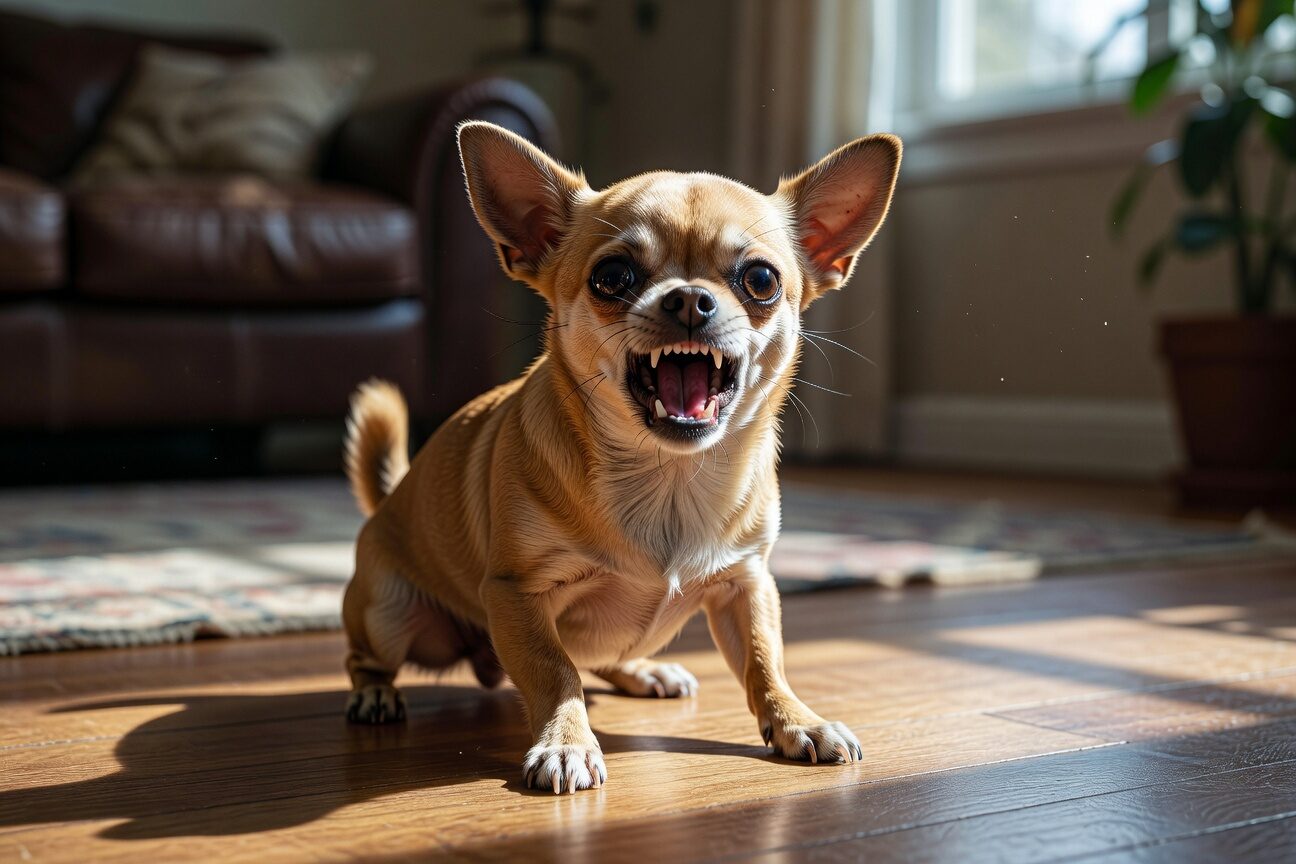
According to the AKC’s guide to canine body language, these eye signals are among the most reliable indicators that a dog is feeling threatened and may escalate to aggressive behavior if the perceived threat does not back off.
3. Lip Licking and Yawning When Not Tired or Hungry
Stress yawning and lip licking look different from their normal counterparts. A stress yawn is wider, more exaggerated, and often accompanied by a whine or a full body shake. Stress lip licking happens rapidly and repeatedly, like your chihuahua is trying to lick something invisible off their nose. These are displacement behaviors, the dog equivalent of nervous fidgeting, and they indicate that your chihuahua is uncomfortable and looking for a way to cope.
Ziggy lick, lick, licks his nose rapidly when we encounter other dogs on walks. I used to ignore it because it seemed harmless, but I now recognize it as the first signal in his anxiety ladder. If I see the lip licking start, I increase distance from whatever is triggering it before things escalate further.
4. Ears Pinned Flat Against the Head
Chihuahuas have large, expressive ears that give away their emotional state. When those ears go from their normal upright or relaxed position to being pinned flat against the skull, your chihuahua is telling you they are scared or stressed. This is especially significant in combination with other body language signals. Pinned ears alone might just mean uncertainty, but pinned ears plus trembling plus whale eye means your dog is approaching their threshold.
5. Tucked Tail and Lowered Body Posture
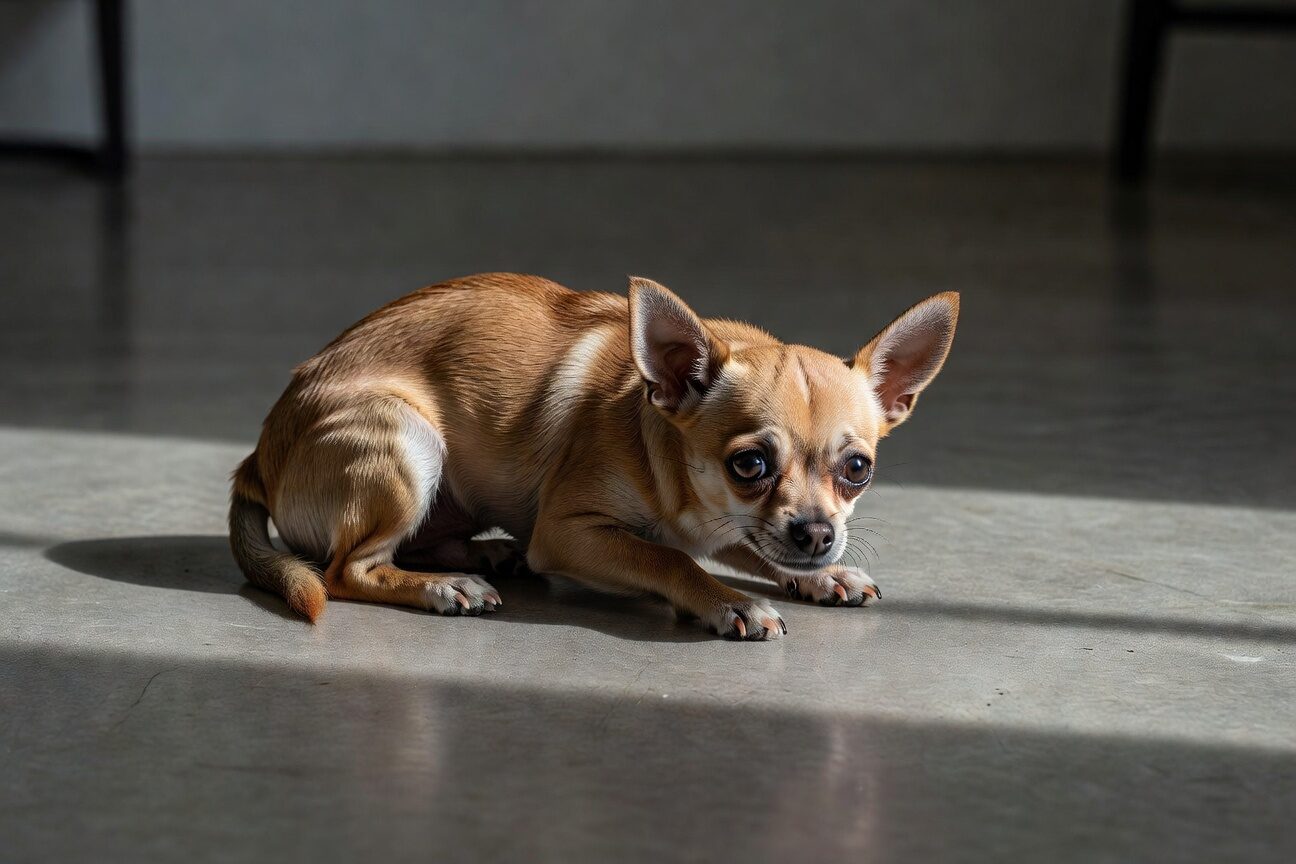
A chihuahua who tucks their tail between their legs and lowers their body is trying to make themselves smaller, which is an instinctive response to feeling threatened. If this posture is accompanied by backing away or trying to hide behind your legs, your chihuahua is communicating as clearly as they possibly can that they want out of whatever situation they are in. Ignoring these signals and forcing them to stay is how bites happen, because when flight fails, fight is the only option left.
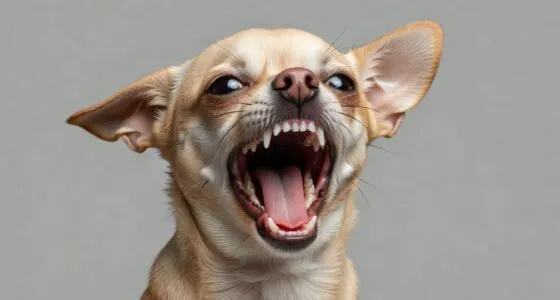
6. Growling, Snarling, or Baring Teeth
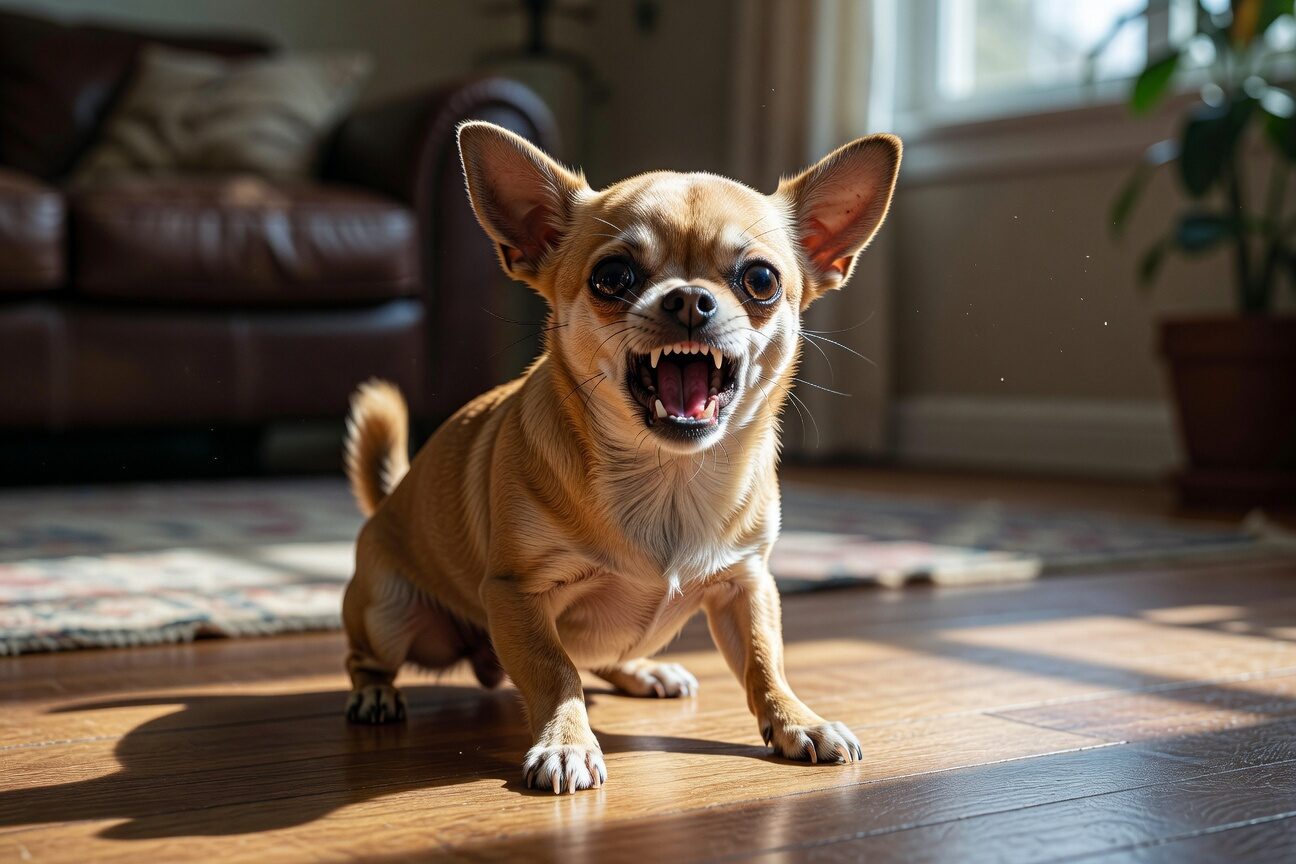
These are the more obvious signs, and ironically they are the ones owners most often punish rather than listen to. A growl is communication, not defiance. Your chihuahua is saying I am uncomfortable and I need this to stop, and punishing a growl does not make the fear go away, it just removes the warning system, which makes a bite more likely because the dog has learned that giving warnings gets them in trouble.
When Ziggy growls, I immediately assess the situation and remove him from whatever is triggering the response. I do not scold him for growling because I want him to keep communicating with me. A chihuahua who growls is a chihuahua who is still trying to resolve the situation without biting. That is valuable information, not bad behavior. The behavior experts at PetMD agree that suppressing growling actually increases bite risk because it eliminates the dog’s early warning system.
7. Snapping or Air Biting
If your chihuahua snaps at the air near someone without making contact, that is the final warning before an actual bite. Air snapping is intentional, the dog is choosing to miss because they do not actually want to bite, but they have run through every other signal in their repertoire and nothing has worked. If you see air snapping, remove your chihuahua from the situation immediately, no exceptions, no second chances.
The child Ziggy snapped at was preceded by about five minutes of signals I should have caught. He was trembling, lip licking, showing whale eye, and had moved behind my legs twice before the child approached. I missed all of it, and Ziggy escalated because he had no other option. That incident was the wake up call that made me learn canine body language properly.
What to Do When You Recognize These Signs
The moment you see anxiety signals building, increase distance between your chihuahua and whatever is causing the stress. Do not force exposure in the hope that your dog will get used to it, because flooding an anxious dog with the thing they fear typically makes the anxiety worse, not better. Create space, let your dog calm down, and address the root cause through proper desensitization and counterconditioning work, ideally with the guidance of a professional trainer who uses positive methods.
Socialization is the best prevention for nervous aggression, and it is most effective during puppyhood but can still make a difference with adult dogs. If your chihuahua is already showing signs of nervous aggression, a veterinary behaviorist can help create a tailored plan that may include behavior modification, environmental management, and in some cases medication to reduce overall anxiety levels.
Ziggy is a different dog now than he was when he snapped at that child. Through consistent work with a trainer, careful management of his environment, and my own improved ability to read his body language, his anxiety has decreased significantly. He is never going to be the most social chihuahua in the world, but he is able to navigate most situations calmly because I finally learned to listen to what he was telling me. For related reading, explore our guides on helping a stressed chihuahua and addressing nipping and biting.